Press Release · American Institute for Identity Safety
Identity Theft Prompts Industry Veteran to Launch American Institute for Identity Safety
Distributed by News Today Lines · Originally issued via PR Newswire
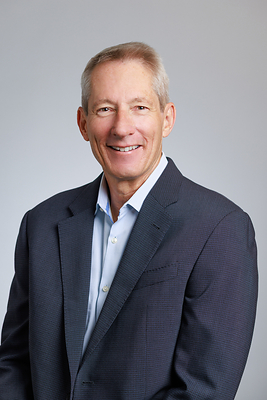
New institute will advance nonpartisan reforms for victim restoration, stronger identity security, and protection from scams and AI-enabled deception.
SAN DIEGO, Nov. 12, 2026 — Eric Haller spent more than 30 years working in identity and fraud prevention. Then his own identity was stolen, giving him a firsthand view of how difficult it can be for victims to clear their names and restore their lives.
That experience led Haller to establish the American Institute for Identity Safety (AIIS) and to focus on identity safety through his fellowship at Harvard University's Advanced Leadership Initiative.

About 18 million Americans are affected by identity fraud each year, according to Javelin Strategy & Research's 2026 Identity Fraud Study, so the need extends far beyond his own experience.
AIIS launches with a central question: What should happen after someone says, "That's NOT me!"?
"I had spent decades working on systems designed to detect fraud and protect identity. Becoming a victim gave me a different perspective," said Haller, founder of AIIS. "We have invested heavily in detecting fraud, but people still face a fragmented process for resolving the damage. Victims need a clear path to getting their lives back."
The institute's initial focus is on proposed state and federal reforms to give identity-theft victims faster relief and a coordinated path to restoration. Under the proposed approach, victims could securely verify their identity, submit evidence through a national hub, receive provisional protection while claims are reviewed, and get timely decisions that participating institutions can act on. Strong identity verification, human oversight, and safeguards against fraudulent claims would be central to the process.
"Victims need a process that works, and banks need a process they can trust," Haller said. "A coordinated approach can help both, reducing the burden on innocent people while giving institutions greater confidence in how claims are resolved."
AIIS's broader mission spans national identity security and scam protection, with particular attention to children, older adults, and other vulnerable populations. Its work will connect better recovery with stronger prevention, including ways to make stolen personal information less useful to criminals.
Artificial intelligence adds urgency to that agenda. Deepfake voices and video create new opportunities for impersonation, while emerging technologies also offer ways to strengthen identity verification and fraud prevention.
"Identity safety means preventing harm where we can and helping people recover when prevention fails," Haller said.
Haller brings senior leadership experience from his time with Experian and TransUnion. He created and led Experian DataLabs and served as TransUnion's Chief Data & Analytics Officer. His work combines industry experience in identity, fraud, and artificial intelligence with the perspective of someone who has navigated identity theft personally.
AIIS is inviting policymakers, researchers, consumer advocates, and industry leaders to help develop practical, nonpartisan solutions.
Learn more at www.americaninstituteforidentitysafety.com.
Media Contact: Eric Haller, American Institute for Identity Safety
[email protected] (949) 648-3406
SOURCE American Institute for Identity Safety
About AIIS: The American Institute for Identity Safety, Inc. is a California nonprofit corporation advancing nonpartisan public-policy solutions focused on identity-theft victim restoration, national identity security, and protection from scams and AI-enabled deception.
Protecting identity. Restoring trust.