Press Release · Dyson
Harvard students win the 2026 James Dyson Award's Global Medical category for Rumble Rims, a breakthrough concussion-screening headset
Distributed by News Today Lines · Originally issued via PR Newswire
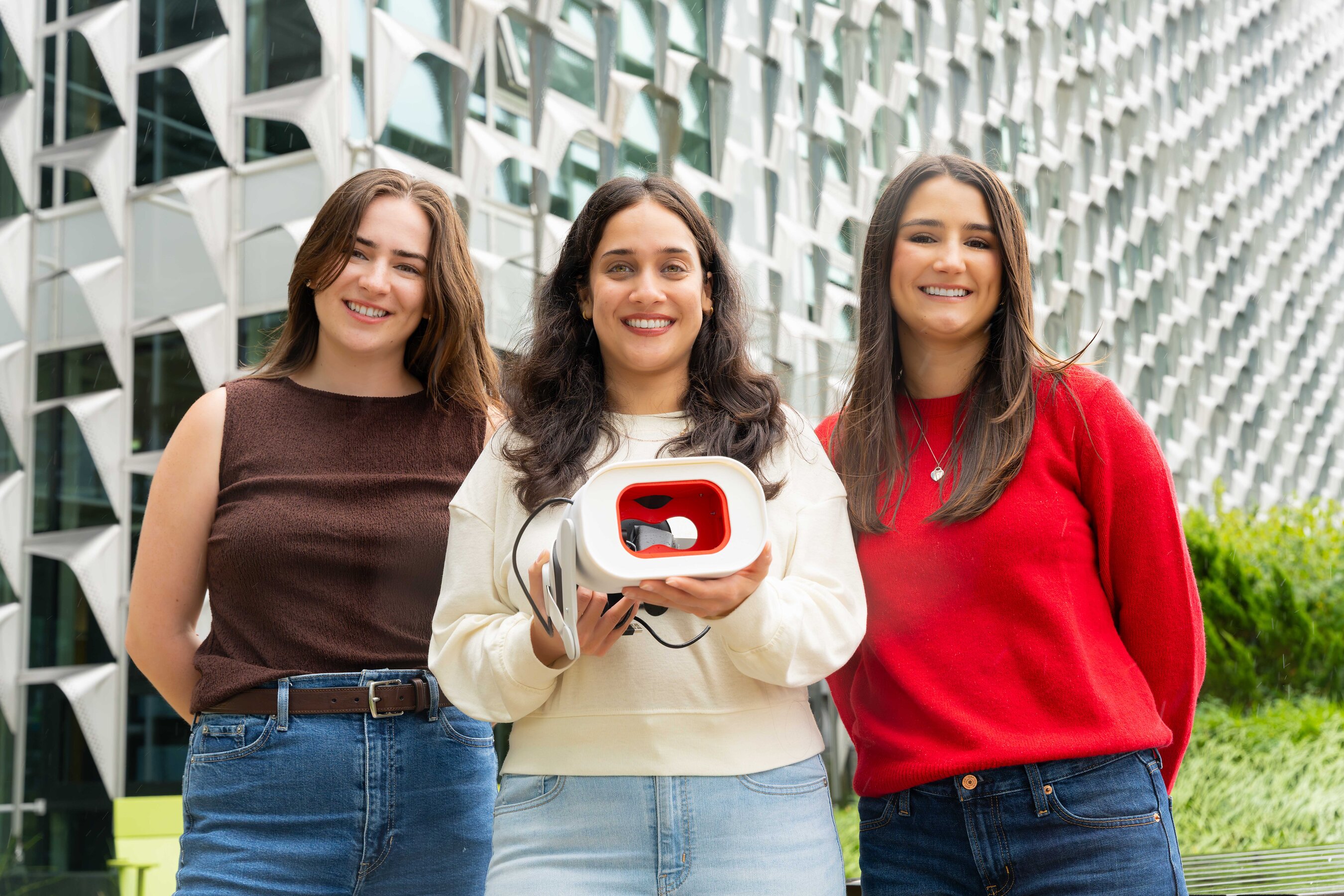
BOSTON, Nov. 4, 2026 — Rumble Rims, a low-cost headset designed to bring objective concussion screening to the sidelines, has won the Global Medical category of the 2026 James Dyson Award. Created by Harvard University students Cleo Pontone, Radhika Saran and Sophia DeVito, the U.S. invention uses infrared eye-tracking to help identify possible neurological impairment when critical decisions must be made. The team will receive $40,000 to accelerate development of the technology.
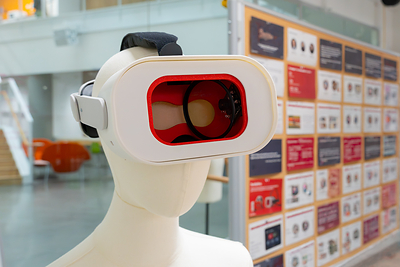
Rumble Rims has won the 2026 James Dyson Award's Global Medical category. Selected by Sir James Dyson, the Harvard team's invention addresses one of sports' most urgent safety challenges: recognizing a possible concussion quickly and objectively before an athlete returns to play.
The honor places Rumble Rims among the world's most promising student inventions. Since 2005, the James Dyson Award has supported more than 400 student inventions worldwide with $2 million in prize money. This year, 2,294 entries were submitted by emerging engineers across 28 countries and regions—the highest number in the competition's history.
James Dyson on Rumble Rims: "All too often, we hear of those having accidents involving head injuries, particularly amongst athletes, and suffering the consequences later in life. Yet spotting concussion is complex, requiring specialist equipment and hospital expertise, so screening isn't always done when it should be. Cleo, Radhika and Sophia have found a new way to bring objective screening to the sidelines, where the critical decisions are made. It could help prevent the lasting brain injuries that affect so many sportsmen and women."
2026 Global Medical Winner – Rumble Rims, invented by Cleo Pontone, Radhika Saran and Sophia DeVito
A critical challenge in sports
Concussion is a serious concern at every level of sports, from youth leagues to elite competition. When it goes unrecognized and an athlete continues to play, the risk of further brain injury can increase. Yet concussion can be difficult to identify in the moment because symptoms differ from person to person and may take up to 72 hours to appear.
Objective assessment technologies are available, but many are expensive, clinic-based or dependent on specialist expertise. That can leave schools, youth leagues and grassroots teams relying heavily on subjective sideline judgment precisely when fast, informed decisions matter most.
A winning solution built for the sidelines
Harvard University students Cleo Pontone, Radhika Saran and Sophia DeVito developed Rumble Rims to help close that gap. Their low-cost infrared eye-tracking headset is designed to bring objective concussion screening to the sidelines, placing potentially valuable neurological insight closer to athletes, coaches and trainers at the moment of concern.
During a two- to three-minute test, infrared cameras measure how an athlete's eyes follow, fixate and move—behaviors that can provide an objective indication of neurological impairment. A mobile display translates those measurements into real-time guidance to help inform whether an athlete should be removed from play and referred for professional medical assessment.
Rumble Rims extends beyond the initial sideline screening. Its recovery dashboard enables repeat testing over time, creating an objective record that athletes, families and clinicians can use to monitor progress before returning to play. The system is intended as a screening tool, not a diagnostic device; return-to-play decisions remain under the direction of a qualified healthcare professional.
The team moved through prototypes involving helmets, mouthguards and chin rests before developing the current headset, which uses side-mounted infrared cameras and 45-degree dichroic mirrors. Feedback from medical professionals and coaches informed the design throughout. With support from the James Dyson Award, the team plans to build and test a higher-fidelity prototype, refine the eye-movement assessment and validate Rumble Rims with athletes, coaches, trainers and medical advisers. Their longer-term ambition is to pilot the technology with schools and youth sports programs and pursue medical device validation.
On winning the James Dyson Award, Cleo, Radhika and Sophia said: "The recognition from the James Dyson Award validates our belief that we don't have to accept problems as they stand today. Concussions in youth sports have become something we treat as routine, despite their long-term neurological impact. We can challenge norms like this one and design a more usable, accessible world where technology reaches people when they need it most, not after the damage is done. This award gives us an incredible opportunity to progress towards pilots that could put Rumble Rims on every sideline."
Shuya Gong, Faculty of Master's in Design Engineering at Harvard, said: "What impressed me most about Cleo, Sophia, and Radhika was how, through rapid prototyping and curious experimentation, they found elegant ways to test ambitious ideas while holding themselves to the conviction that their solution should be affordable and easy to use, whether on the sidelines or at home. Rumble Rims is a fantastic collision of designing for care and engineering rigor."
James Dyson Award
The James Dyson Award is an international design competition that inspires and celebrates the next generation of design engineers. Now in its 21st year, the Award has supported more than 400 problem-solving inventions with over $2.3m in prize money. It operates across 28 countries and regions and is run by the James Dyson Foundation, Sir James Dyson's engineering-education charity.
James Dyson Foundation
The James Dyson Foundation, established in the UK in 2002, now supports design, technology and engineering education programs not only in the UK but also in countries around the world, including the United States, Japan, Singapore, the Philippines and Malaysia. To date, James Dyson and the James Dyson Foundation have donated more than $210 million to charitable causes. This includes a $16 million donation to establish the Dyson School of Design Engineering at Imperial College London, an $11 million donation to support the creation of the Dyson Centre for Engineering Design and the James Dyson Building at the University of Cambridge and finally, a $10.5 million donation to fund Malmesbury Primary School's STEAM Center and expansion project.
1 Sarmiento, K., Thomas, K. E., Daugherty, J., Waltzman, D., Haarbauer-Krupa, J. K., Peterson, A. B., Haileyesus, T., & Breiding, M. J. (2019). Emergency department visits for sports- and recreation-related traumatic brain injuries among children — United States, 2010–2016 . MMWR Morbidity and Mortality Weekly Report, 68(10), 237–242.
2 DePadilla, L., Miller, G. F., Jones, S. E., Peterson, A. B., & Breiding, M. J. (2018). Self-reported concussions from playing a sport or being physically active among high school students — United States, 2017 . MMWR Morbidity and Mortality Weekly Report, 67(24), 682–685.
3 Centers for Disease Control and Prevention. Responding to a sports-related concussion; and Centers for Disease Control and Prevention. Returning to sports. CDC HEADS UP.
4 Eye-movement and ocular biomarker research, including Murray et al. Smooth pursuit and saccades after sport-related concussion; and Carrick et al. The pupillary light reflex as a biomarker of concussion.
SOURCE Dyson