Press Release · Hi-Dolphin Robot Technology
COFE+ 7th-Generation Robotic Barista Outperforms Award-Winning Barista in 2026 Yiwu International Coffee Masters Live Competition
Distributed by News Today Lines · Originally issued via PR Newswire
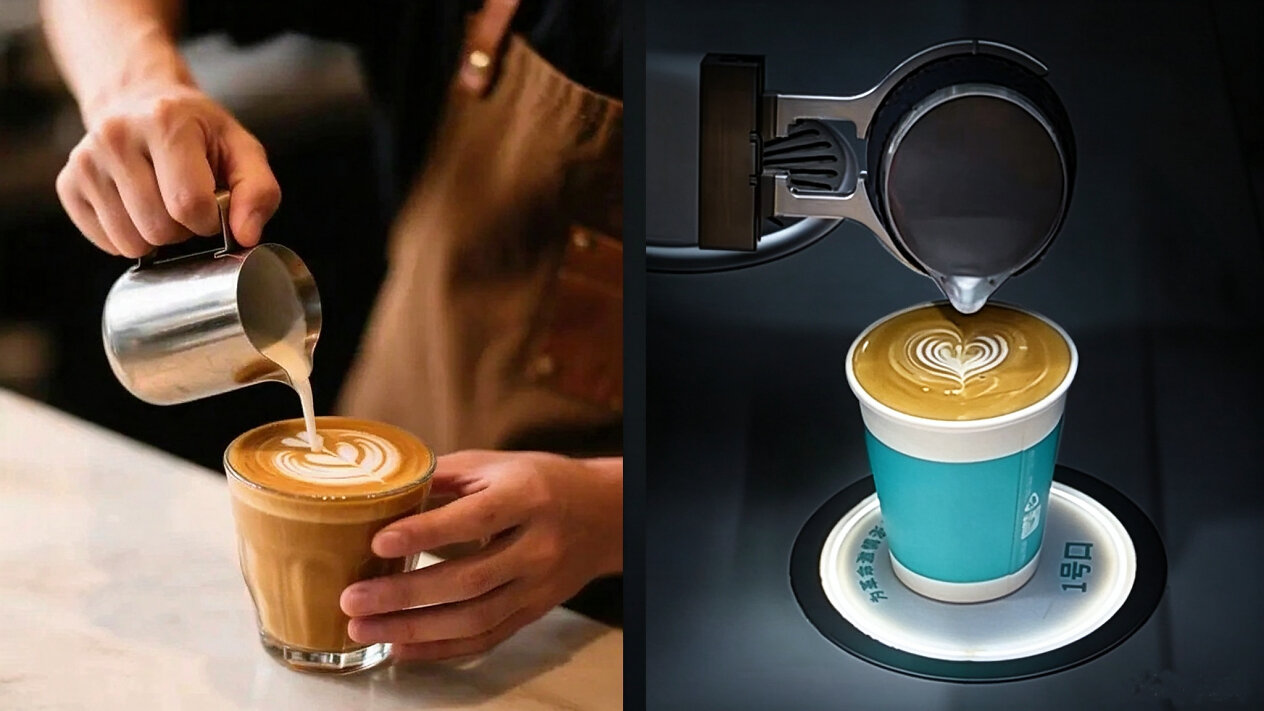
A head-to-head challenge at the 7th LD International Coffee Masters Competition highlights advances in robotic beverage preparation, speed, and consistency.
SHANGHAI, Nov. 20, 2026 — At 11:30 a.m. on November 14, 2026, COFE+, the seventh-generation robotic barista developed by Shanghai Hi-Dolphin Robot Technology Co., Ltd., outperformed an award-winning barista in a live head-to-head competition at the 7th LD International Coffee Masters Competition, held as part of The 2026 China Yiwu Imported Commodities Fair.
The publicly witnessed and recorded challenge compared human and robotic coffee preparation across five beverage categories, evaluating end-to-end serving time and the consistency of measured beverage weights. COFE+ recorded shorter serving times across all five tested drinks and demonstrated substantially lower variation in the weight of five prepared lattes.
Shanghai Hi-Dolphin positions the result as a world-first milestone for robotic coffee technology in the context of a formal international coffee masters competition, highlighting the growing capabilities of AI-powered robotics in performing tasks traditionally associated with professional baristas.
A Measurable Advantage in Serving Speed
The competition applied a consistent end-to-end timing standard. The clock started when an order was placed and stopped when the finished beverage was handed to the judges. The measurement covered the complete service process, including order placement, cup collection, preparation, completion, and handover, rather than just the time spent making the coffee.
All results were recorded to the nearest second.
The five beverages were timed as follows:
Beverage | COFE+ Robotic Barista | Award-Winning Barista |
Espresso | 30 seconds | 32 seconds |
Cappuccino | 36 seconds | 40 seconds |
Classic latte | 43 seconds | 48 seconds |
Swan-design latte art | 70 seconds | 88 seconds |
Audrey Hepburn portrait latte, produced using 3D printing | 68 seconds | 78 seconds |
COFE+ completed all five beverages in less time than its human counterpart. Its average serving time was 49.4 seconds per drink, compared with 57.2 seconds for the award-winning barista. In other words, the human barista took approximately 1.16 times as long as COFE+ across the five tested beverages.
The difference was particularly noticeable in the more intricate latte-art preparation. For the swan-design latte art, COFE+ completed the drink in 70 seconds, compared with 88 seconds for the human barista. The result demonstrated the robotic system's ability to combine efficient beverage preparation with more elaborate presentation techniques.
These results highlight the potential of AI-driven algorithms and precision robotic control to support efficient and repeatable beverage preparation across different drink types.
Weight Consistency and Repeatability: A Measurable Advantage in Robotic Preparation
Beyond serving speed, the competition also examined beverage preparation consistency. Each side prepared five lattes of the same type, which were weighed on site.
The five drinks prepared by the COFE+ seventh-generation robotic barista weighed 232.5 g, 232.2 g, 233.3 g, 234.7 g, and 230.0 g, respectively. Their average weight was 232.54 g, with a sample standard deviation of 1.72 g.
The five drinks prepared by the award-winning barista weighed 233.7 g, 232.1 g, 230.2 g, 246.2 g, and 225.9 g, respectively. Their average weight was 233.62 g, with a sample standard deviation of 7.61 g.
The human barista's sample standard deviation was approximately 4.43 times that of COFE+. Despite having similar average serving weights, the two sets of drinks showed substantially different levels of variation.
COFE+ demonstrated a tighter distribution of measured weights, highlighting the potential of robotic automation to deliver more repeatable beverage preparation. The results illustrate an important advantage of intelligent coffee robotics: the ability to maintain greater consistency in measurable preparation parameters, supporting standardized beverage production across commercial operating environments.
Beyond the Competition: The Evolution of Coffee Retail
The implications of the competition extend beyond the performance of a robotic barista. As coffee retailers navigate changing labor costs, operating expenses, and consumer expectations, technology-enabled service models are attracting growing attention.
Traditional cafés depend heavily on skilled personnel to manage beverage preparation, customer service, and daily operations. While professional baristas remain central to the craft and customer experience of specialty coffee, staffing, training, workforce scheduling, and service availability can present operational challenges, particularly for businesses serving high-traffic environments or managing multiple locations.
AI-powered robotics offer an alternative approach. By integrating automated beverage preparation, precision robotic control, and intelligent operations management, robotic cafés can help standardize service processes, improve space utilization, and support more flexible operating hours.
For COFE+, this approach is reflected in its Light-Store Business Model, which combines compact robotic cafés, automated beverage production, and centralized remote operations. Its systems are designed for deployment in airports, hospitals, universities, shopping centers, office buildings, transportation hubs, and other commercial environments where space efficiency and extended service availability are important.
The COFE+ Smart Store Brain connects beverage production with intelligent retail management. Operators can remotely monitor equipment status, sales performance, and inventory levels, supporting centralized oversight across multiple locations. According to the company, one operator can remotely manage five to ten robotic café units, depending on operating conditions and management requirements.
Designed for 24-hour operation, COFE+ can provide beverage service beyond the conventional operating hours of many staffed cafés. Its automated workflow reduces the need for continuous on-site beverage preparation by specialist personnel, while routine replenishment, cleaning, and maintenance remain part of normal operations.
According to company estimates, the COFE+ operating model can reduce operating costs by up to 90% and electricity consumption by up to 80% compared with conventional café formats. These potential savings are associated with its compact footprint, automated workflow, and remote management capabilities, with actual results depending on location, operating conditions, and the cost assumptions used for comparison.
Rather than simply replacing traditional cafés, this model expands the possibilities of coffee retail by enabling more flexible, standardized, and technology-driven service points across a wider range of commercial and public environments.
COFE+ 7th Generation: Eight Years of Innovation Behind Intelligent Coffee Robotics
The performance demonstrated in Yiwu reflects eight years of research and development and seven generations of technological evolution by Shanghai Hi-Dolphin Robot Technology Co., Ltd.
The seventh-generation COFE+ Robotic Café integrates robotics, artificial intelligence, automated beverage preparation, and intelligent retail management into a commercial robotic beverage platform.
Its technical capabilities include a six-axis robotic arm, freshly ground coffee preparation, automated extraction, milk steaming, beverage assembly, and robotic latte art. The system supports more than 300 beverages across eight major categories, covering coffee, tea, chocolate, dairy-based and plant-based drinks, as well as other hot and cold beverage options.
Its integrated edible 3D foam printing technology enables customized images, logos, and text on beverage surfaces. AI-driven process control helps manage key preparation variables and ingredient ratios for different beverage recipes and consumer preferences.
The technology platform is backed by the company's accumulated R&D capabilities. Shanghai Hi-Dolphin has developed a portfolio of 120 patents and more than 1,200 proprietary process technologies. These capabilities underpin its ongoing development of robotic control, beverage preparation, and intelligent store management systems.
Designed for commercial environments, the COFE+ robotic coffee kiosk occupies approximately 2.35 square meters. The system is engineered for a rated service life of more than 10 years, with a single-unit design capacity of up to 500,000 cups and maximum daily throughput of up to 1,000 beverages, subject to operating conditions and maintenance requirements.
These capabilities are designed to support a range of commercial applications, from compact coffee points to larger robotic beverage service installations.
Expanding Across International Markets
COFE+ has continued to expand its international presence. According to the company's September 2026 announcement, its robotic café solutions had reached 75 countries across five continents, alongside deployments in more than 200 Chinese cities across 27 provincial-level regions.
The company's global business spans commercial, institutional, transportation, healthcare, educational, and public-service environments. Its international expansion reflects growing interest in automated beverage service solutions that combine freshly prepared drinks with compact deployment and centralized management.
According to company figures, COFE+ has served more than 500 million cups worldwide, reflecting the scale of its accumulated commercial activity. The company continues to expand its international deployment network and develop its robotic beverage technology for diverse operating environments.
Redefining the Possibilities of Coffee Retail
The live competition at The 2026 China Yiwu Imported Commodities Fair brought the capabilities of commercial robotic coffee technology into a public, measurable setting. By demonstrating faster serving times across five tested beverages and lower variation in measured beverage weights, COFE+ showcased the progress achieved through years of research, engineering, and product iteration.
From freshly ground coffee and automated latte art to intelligent remote management and compact retail deployment, COFE+ is advancing a new approach to beverage service.
As AI and robotics continue to reshape the possibilities of automated retail, Shanghai Hi-Dolphin remains committed to advancing the next generation of intelligent robotic cafés and expanding their applications worldwide.
SOURCE Hi-Dolphin Robot Technology
About Shanghai Hi-Dolphin Robot Technology Co., Ltd.
Founded in January 2018 and headquartered in Shanghai, China, Shanghai Hi-Dolphin Robot Technology Co., Ltd. is an AI and robotics company specializing in the research, development, and commercial operation of intelligent robotic cafés. Through its flagship brand COFE+, the company integrates robotics, artificial intelligence, automated beverage preparation, and intelligent retail management to deliver robotic coffee and beverage solutions for commercial environments worldwide.